
Durham University and its Colleges
Durham Pointers are a familiar sight at University Open Days and at Congregation, helping prospective and graduating students and their families find their way around the city and the university. We’re often asked about the university’s layout, its colleges and a little of the history behind them, so here are the answers we give most often, followed by a closer look at each college.
(Written By Alice Severs, Durham Pointer and local resident. Note: This article is a personal perspective written by an individual., not an official University article)
For practical travel information, see our Getting to and Around Durham City page.
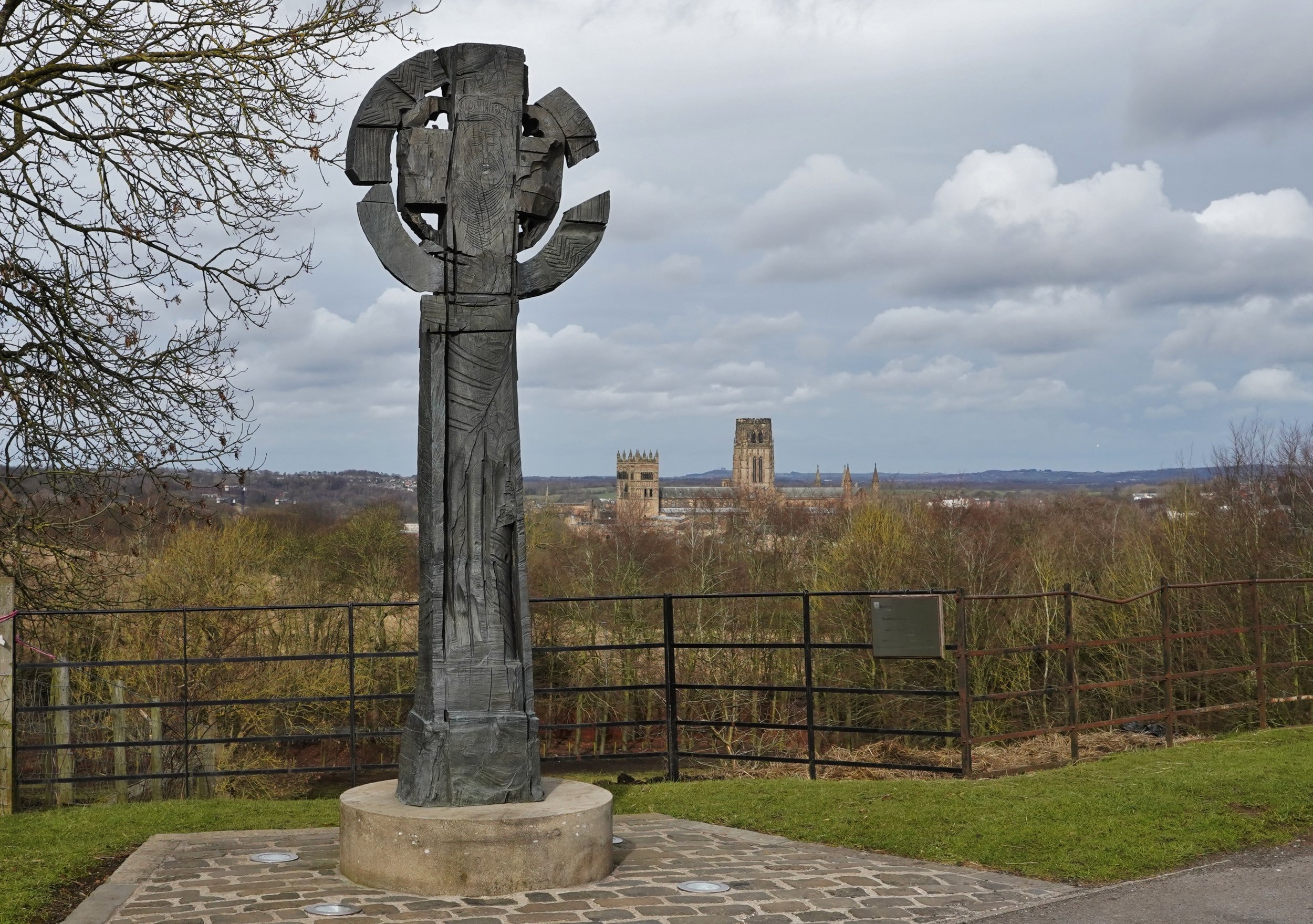
A striking view from St Aidan’s College across the river to Durham Cathedral — one of the best vantage points in the city
Where is Durham University?
Durham University (The Times University of the Year 2026) sits at the heart of Durham City, which is a member of the UNESCO Global Network of Learning Cities. Colleges and academic departments are distributed across the compact city . There are two principal university and college clusters:
The Peninsula: the historic city centre around Palace Green, the Cathedral and Durham Castle. It’s called the Peninsula because it sits inside a meander of the River Wear. Many of the older, more characterful colleges and arts and humanities departments are here.
The Hill: along South Road to the south of the city. This area contains many of the larger, more modern colleges, most of the main teaching buildings and the Bill Bryson Library.
Dunelm House (the Student Union) sits between these two areas and several other university sites and residences are dotted around the city. The great thing about Durham is that almost everything is within easy walking distance, although several bus routes run along South Road for those who prefer a lift.
For the university’s own information, see the Durham University website.
How old is Durham University?
Durham University was founded in 1832, making it the third oldest university in England after Oxford and Cambridge. Its long history and distinctive collegiate system contribute to the unique character of student life here.
What is the College system? Which college should I choose?
Durham follows a college-based system like Oxford and Cambridge, but it differs in that students apply to an academic department and are allocated to a college, which are mixed academic communities. Colleges provide accommodation but are far more than halls of residence, they are the social and pastoral heart for their members, hosting events, dinners, societies and traditions.
Visitors often ask which college is “best.” That’s a question with no single answer: colleges differ by location (Peninsula vs Hill), by building style (medieval, Georgian or modern), and by atmosphere. Hill colleges tend to be slightly nearer the main teaching areas and Mountjoy site; Peninsula colleges are often in older, historic buildings and very close to city-centre amenities. We do know, however, that all students tell us their college is the best!
Alternatives to living in College
The university aims to offer college accommodation to all first-year undergraduates. Many students then move into private rented housing in subsequent years, though they still retain a social connection to their college. Popular student residential areas include the Viaduct, Whinney Hill and Gilesgate, all within walking distance. There are also growing numbers of privately owned purpose-built student flats and studios, often favoured by postgraduate students.
Local residents sometimes raise concerns about late-night noise from student groups returning home . As locals we ask students to be considerate of neighbours.
The Durham University Colleges: detailed notes and history
Below are snapshots of the colleges: where they are, what they’re known for, and a little history to give context when you’re visiting for Open Days or simply exploring the city. (Remember, these notes are written by a local who is not connected to the University). In no particular order:
University College (“Castle”), Durham University
Location: Palace Green: Durham Castle
Type: Peninsula college
Durham Castle is officially University College, but everyone calls it Castle. It’s genuinely astonishing: students live in the medieval fortress and can dine in the magnificent ancient hall, served from what is one of the oldest continually used kitchens in the country. Some student rooms still have double doors; locally, the convention is both doors closed = do not disturb; outer door open = please come in.
History: The Castle was the seat of the Prince Bishops of Durham, a uniquely powerful medieval office. From shortly after the Norman Conquest the Prince Bishops exercised extensive secular powers, holding their own parliament, appointing sheriffs and justices, administering law and levying taxes, all in the interests of keeping the northern border with Scotland stable. Bishop William Van Mildert (later commemorated in a college name) was the last person in that medieval role. in 1832 he gave the Castle for use by the newly founded university and moved his residence to Bishop Auckland.
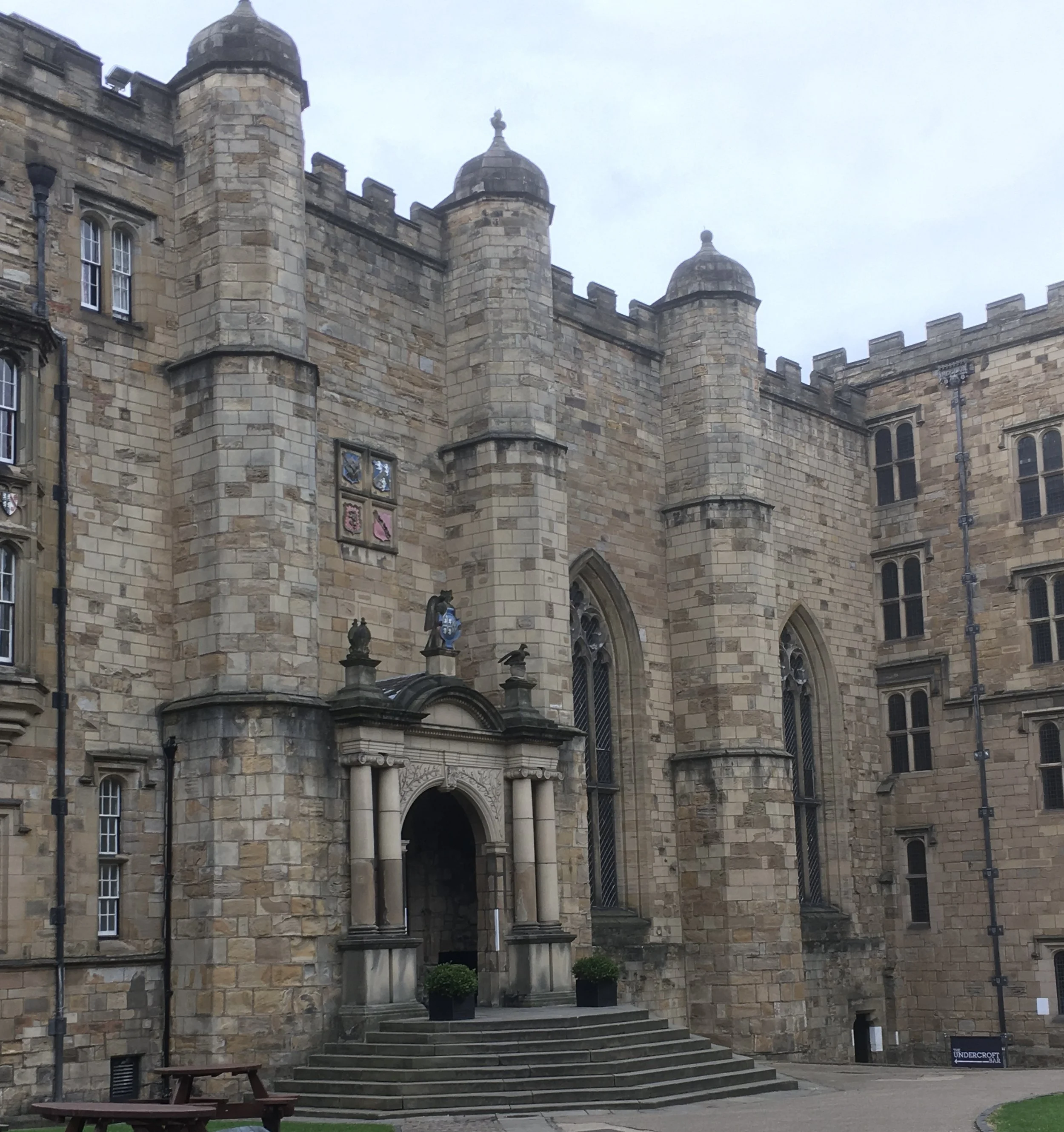
A view of the entrance to Durham Castle, very special student accommodation!
Hatfield College, Durham University
Location: The Bailey, near Kingsgate Bridge
Type: Peninsula college
Hatfield sits on the Bailey close to Kingsgate Bridge (the pedestrian bridge across the Wear) and is only a short walk from Dunelm House and the Bill Bryson Library on the Mountjoy corner. As a Peninsula college it’s convenient for arts teaching and city-centre facilities.
History & character: Established in 1846, Hatfield originally set out to be broadly open to students of different backgrounds (albeit then only men). It introduced the idea of furnished, catered residences with fixed prices for board and lodging, a novel system at the time. Hatfield remained single-sex into the late 20th century: in 1987 nearly 80% of students voting in a referendum favoured staying men-only, but the University Senate overruled that and the college admitted women.
Van Mildert College, Durham University
Location: Off South Road near the Botanic Garden and Oriental Museum
Type: Hill college
Van Mildert is a hill college with easy access to Mountjoy and the Bill Bryson Library. It’s known for a lively student community and an active programme of outreach as students volunteer in many local settings, visiting schools, working with young offenders, supporting older people and offering respite care for families caring for children with disabilities.
History: Named for William Van Mildert, the last of the Prince Bishops who played a key role in establishing Durham University. The college itself opened in 1965.
South College, Durham University
Location: Off South Road, beyond Howlands Park and Ride
Type: Hill college (newest)
South College is the university’s most recent foundation: plans were approved in 2018 and the first students arrived in September 2020. Its motto “Libertas, Aequalitas, Civitas Totius Mondi “ means Freedom, Equality, Global Citizenship. Students have already created new traditions, including a carved wooden owl that circulates to be present at college events. The site is within easy walking distance of Mountjoy and the Library and several buses run along South Road if you prefer not to walk.
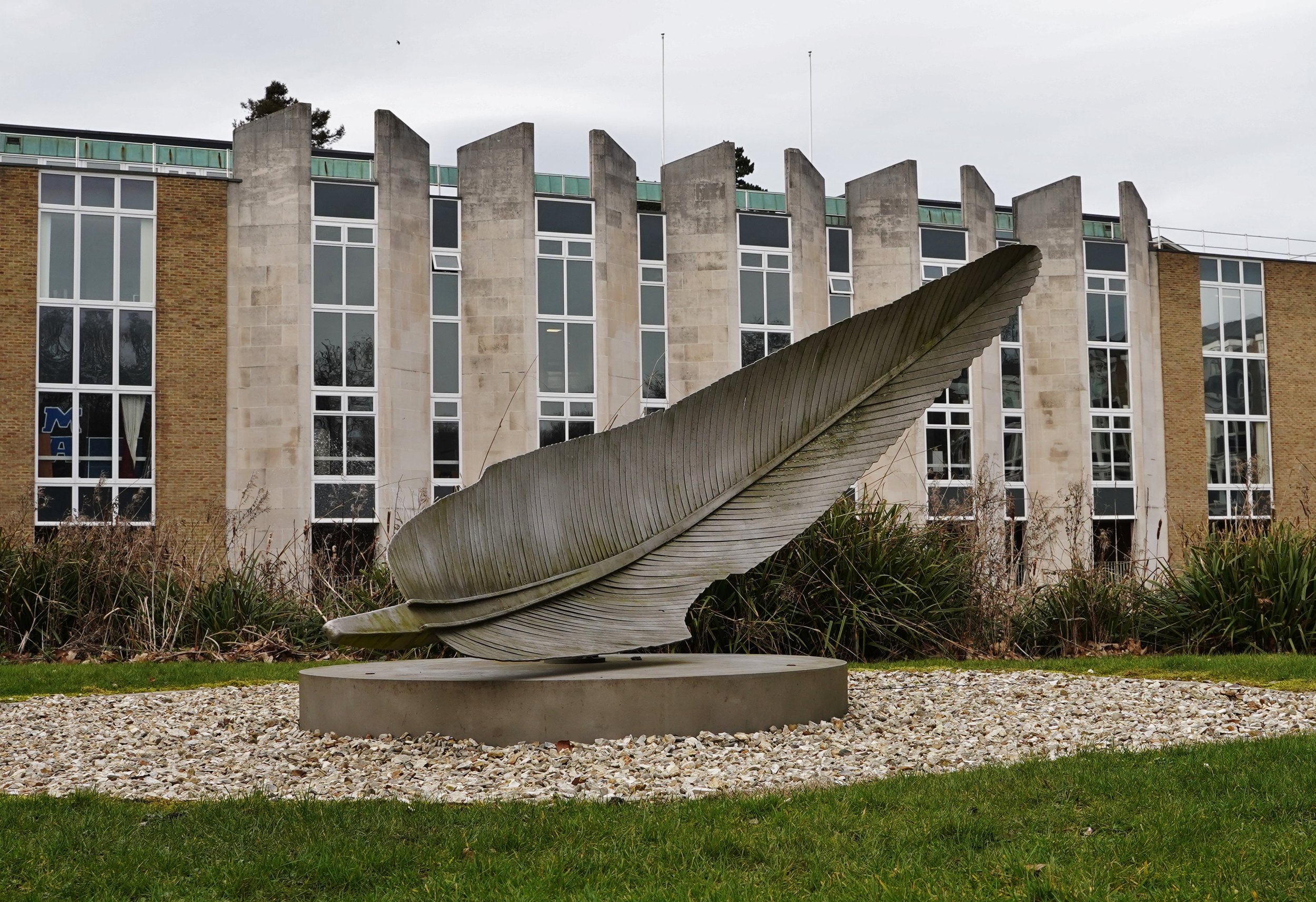
The revolving feather sculpture in the grounds of Van Mildert College, Durham University
Trevelyan College (“Trevs”) , Durham University
Location: Elvet Hill Road, near the Oriental Museum
Type: Hill college
Trevelyan, affectionately Trevs , is named after historian George Macaulay Trevelyan, Chancellor between 1950 and 1957. It sits on Elvet Hill Road just across from the Mountjoy campus, making the library and Palatine Centre a short walk away. The college has a relaxed, friendly atmosphere and an active student life.
John Snow College, Durham University
Location: Off South Road, near the new city history centre, The Story.
Type: Hill college (newer)
John Snow College was founded in 2001 on a Stockton site and relocated to Durham in 2020. It occupies a pleasant campus with several striking sculptures. Although it’s probably one of the colleges furthest from the city centre, it is still a manageable walk to Mountjoy, the Library and teaching buildings.
History: Born in York in 1813, John Snow (not to be confused with either the newsreader or the Game of Thrones character!) was a young GP when cholera broke out in Great Britain in 1831. He concluded that the source was contaminated water, but it was his work during the cholera outbreak in London in 1831 that convinced others. Although now known as the Father of Epidemiology, he also pioneered work in anaesthetics, especially the use of chloroform
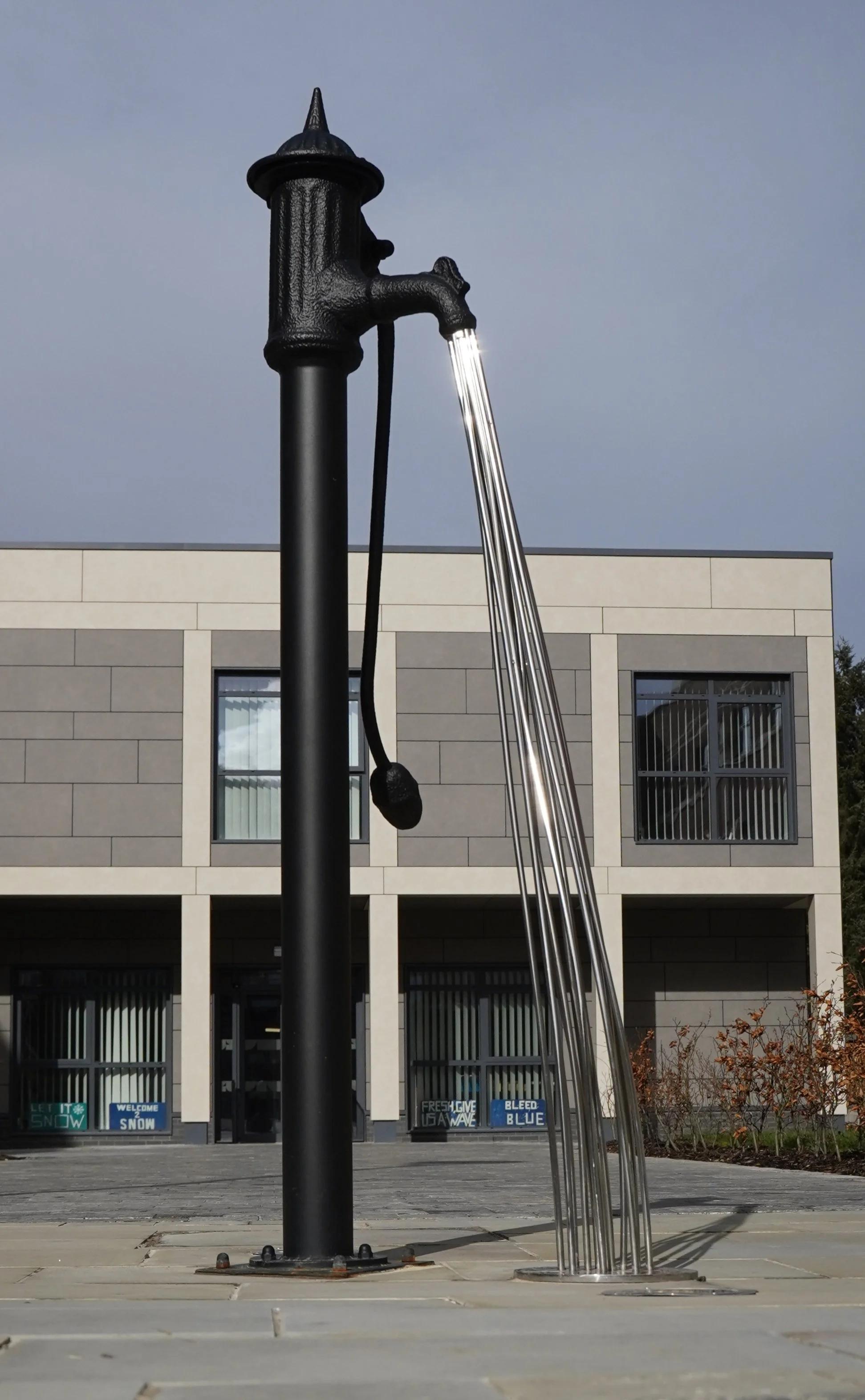
The Pump sculpture outside John Snow College, representing the pump which led to his discovery of cholera as a water born disease
St Chad’s College, Durham University
Location: The Bailey, in a row of Georgian townhouses near the Cathedral
Type: Peninsula college
St Chad’s is a very popular, compact college set in attractive Georgian buildings a few minutes’ walk from the riverbanks and Prebends Bridge, a lovely spot for birdwatching where otters and kingfishers are sometimes seen and salmon can be observed leaping the weirs. It’s also close to both the Palace Green research library and the Bill Bryson Library.
History: St Chad, founder of several monasteries, was educated under St. Aidan in the abbey in Lindisfarne. He is credited with bringing Christianity to the ancient Kingdom of Mercia. The college, however, has roots in St Chad’s Hostel near Doncaster, originally established to prepare men of limited means for theological colleges. In 1904 the Durham college was founded to allow students to read for degrees alongside ordination training. Formal ordination training ceased in 1971; although St Chad’s remains a Church of England foundation, it now welcomes students of all faiths and none across all academic subjects.
St John’s College, Durham University
Location: The Bailey, in a row of listed Georgian townhouses near the Cathedral
Type: Peninsula college
St John’s is one of the smallest colleges, with some delightful gardens reaching down to the river banks. As it was originally a separate college, it still has a degree of independence within the University, both financially and in its governance. Students study for University degrees alongside members of other colleges, but the college prides itself on doing things “a little differently”
History: The college was founded in 1909 as a theological college and is still regarded as a religious college. Some of the houses which make up the college were once owned by theBowes- Lyon family.
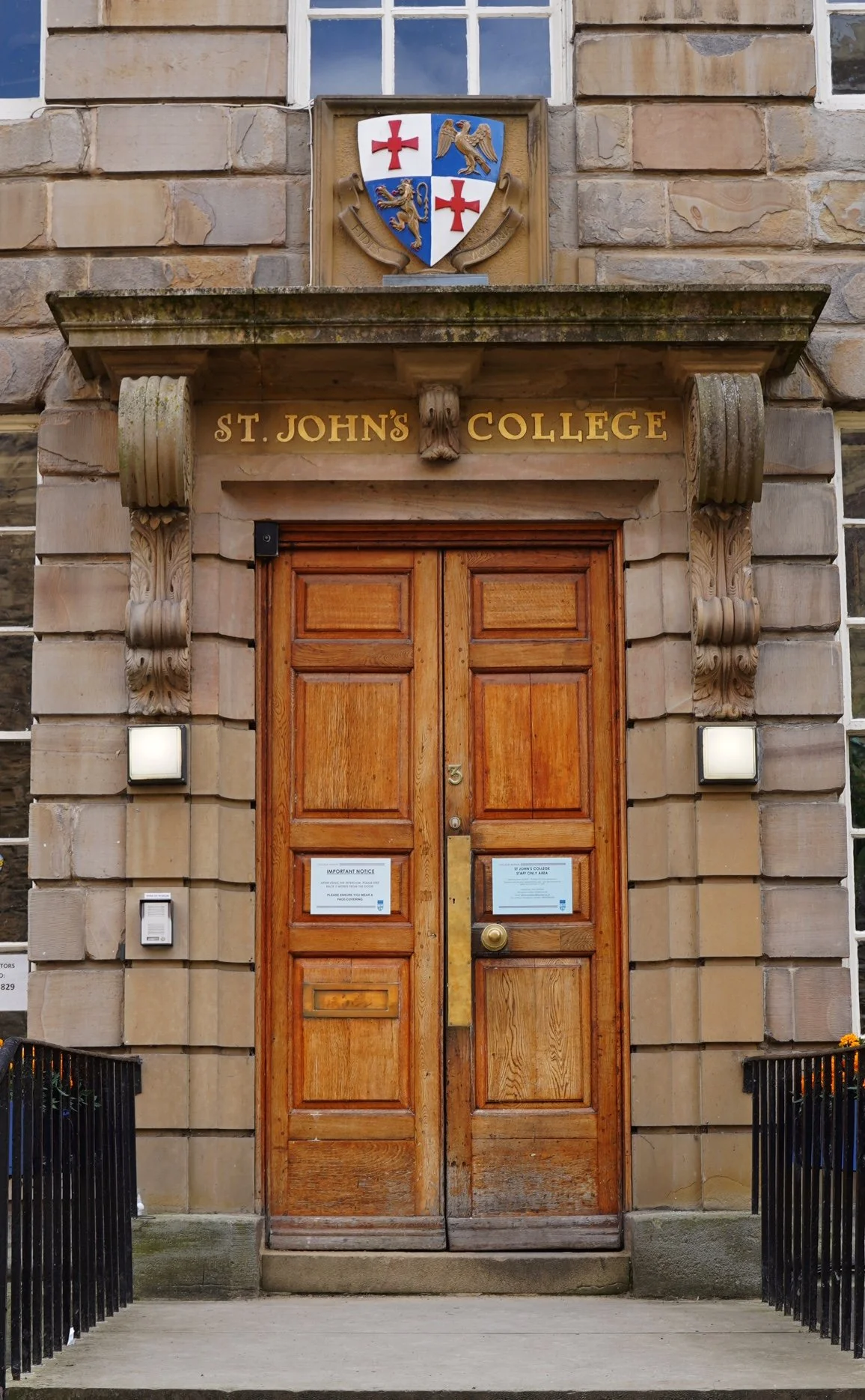
St John’s College on The Bailey, a fascinating historic building
St Mary’s College, Durham University
Location: Elvet Hill
Type: Hill college
St Mary’s occupies a spacious site on Elvet Hill with striking views of the Cathedral and the city. Its grounds have hosted exhibits during the biennial Lumiere festival. Like other hill colleges it’s within easy walking distance of the Bill Bryson Library, the main teaching blocks and the Mountjoy campus.
History: Women were first permitted to receive Durham degrees in 1895, but early female students had to live at home. In 1899 six women were admitted to the Women’s Hostel at 33 Claypath; later homes included Abbey House on Palace Green and then The College behind the Cathedral (now the Chorister School). The name St Mary’s College was adopted in 1920. In 1952 the college moved to its present Elvet Hill site. Debates about co-education continued for decades; finally, in 2005, St Mary’s admitted male students and became the last Durham college to go co-educational.
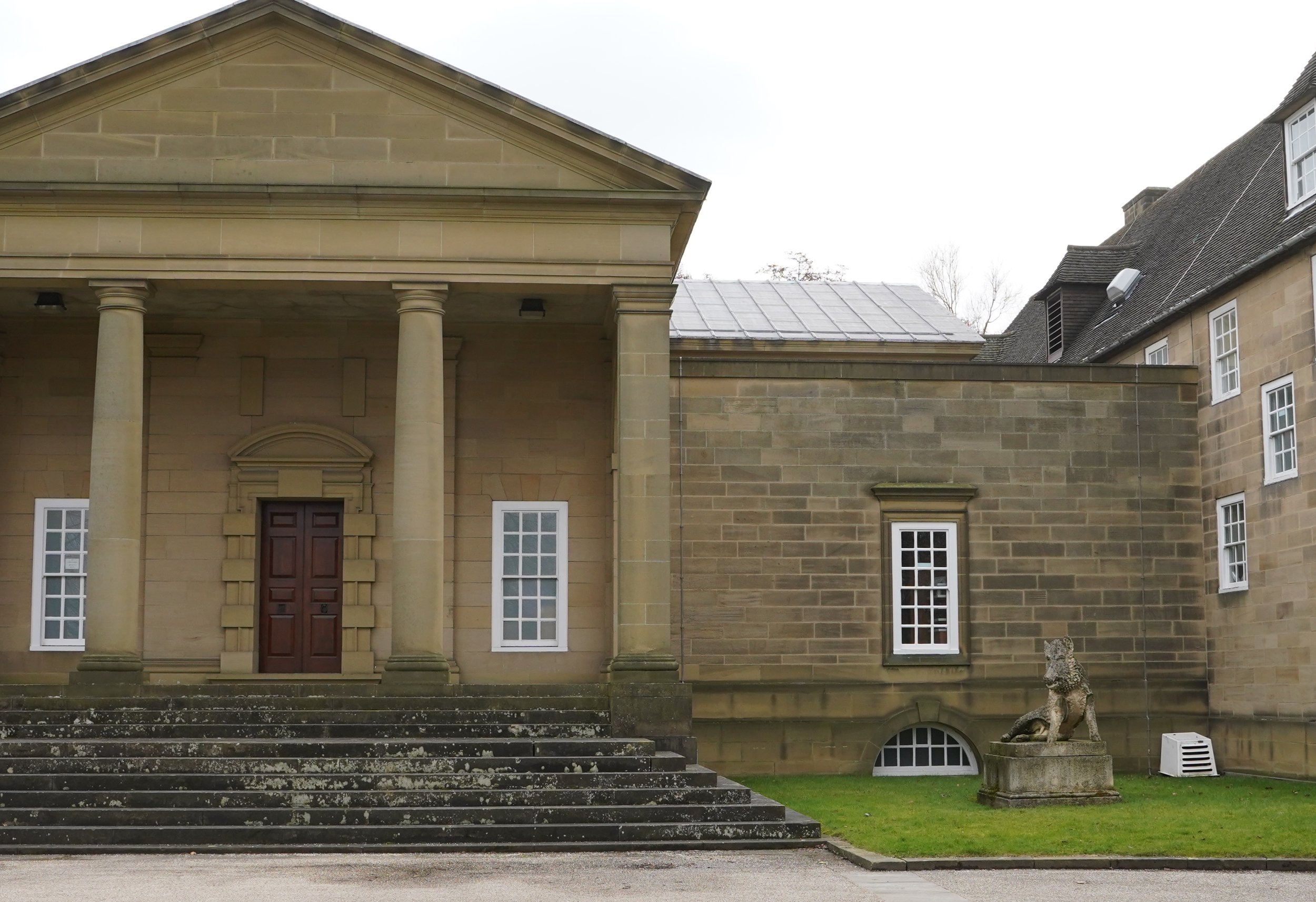
St Mary’s College has several interesting sculptures by the entrance
Collingwood College, Durham University
Location: Mountjoy area, near the Botanic Garden
Type: Hill college
Collingwood opened in 1972 as part of the major expansion of higher education in the 1960s and 70s. It is one of the largest colleges, now home to over 1,100 students, and offers easy woodland walks to Maiden Castle, where the university sports centre is located.
History: Named after Sir Edward Collingwood, a notable Northumbrian mathematician, the college has a modern, lively campus feel.
Grey College, Durham University
Location: Off South Road, adjacent to Collingwood and the Botanic Gardens
Type: Hill college
Grey College was one of the post-war expansion colleges and first opened in 1959. In a dramatic early setback the main block was devastated by fire a few months before opening; the phoenix became an apt unofficial badge. The college is named for Earl Charles Grey, who was Prime Minister around the time of the university’s founding.
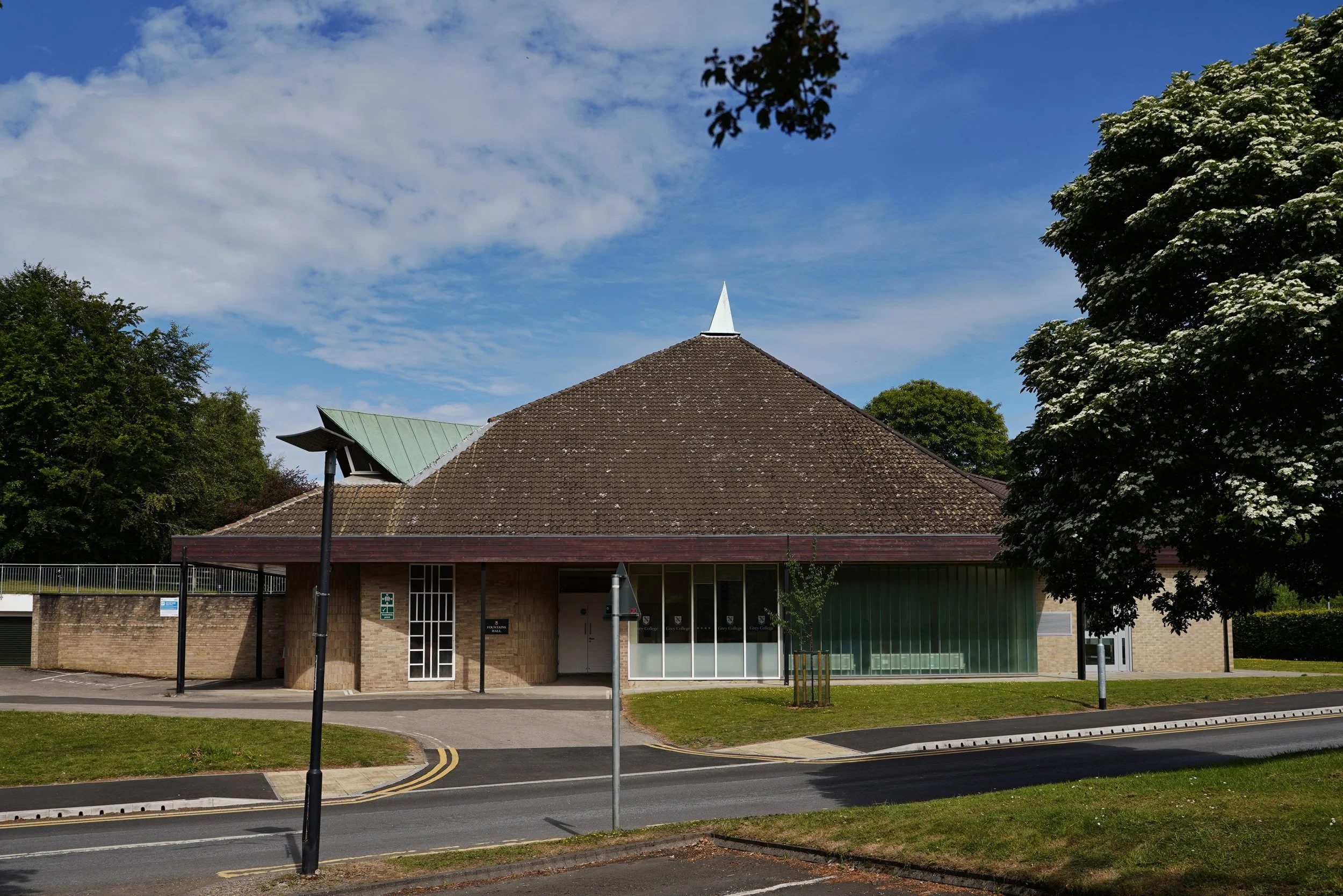
The entrance to Grey College from Hollinside Lane
St Aidan’s College, Durham University
Location: Elvet Hill
Type: Hill college
St Aidan’s enjoys some of the best views across the city and the river to the Cathedral. The college grounds contain notable sculptures, including one commemorating the Holocaust.
History: The college began as the St Aidan’s Society in 1947, formed for women students at a time when women were only recently allowed to study for Durham degrees (from 1895) but lacked a dedicated residential college. St Aidan’s moved to its current Elvet Hill buildings in 1964 and has since developed into a full co-educational college.
Josephine Butler College, Durham University
Location: Off South Road, just beyond the Botanic Gardens and Howlands Park and Ride
Type: Hill college
Josephine Butler College is a modern, self catering hill college within easy walking distance of Mountjoy and the main library, and also well-served by buses on South Road.
History: The college is named for Josephine Butler (born 1828 at Millfield Hill, Northumberland), a prominent social reformer who campaigned for women’s education and suffrage. She also campaigned against the trafficking and exploitation of women, particularly the licensed brothels and the “white slave” trade that sent young girls abroad, and was known for tireless work on behalf of vulnerable women and children. Her legacy in campaigning for women’s rights and social reform inspired the college name.
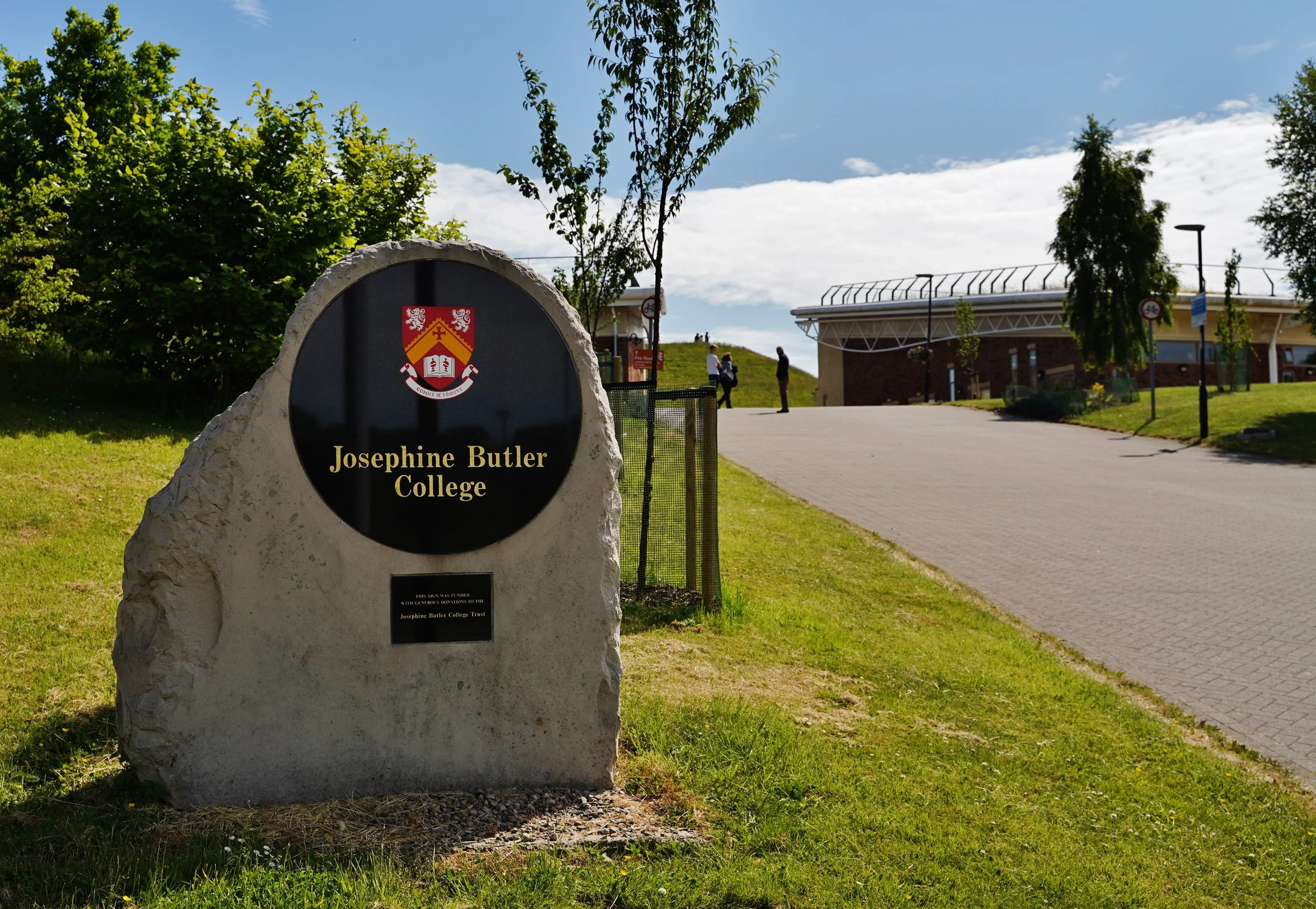
Josephine Butler College is a self catering college by Howlands P&R
Ustinov College, Durham University
Location: Neville’s Cross
Type: Hill (but in a slightly different part of the city from other hill colleges)
Founded in 1965, Ustinov College is named after Sir Peter Ustinov, who was then the chancellor of the University. Unlike the other colleges, it is located in a different part of the city, Sheraton Park, a new development on the site of an old teacher training college. It’s an easy walk down hill to the main Mountjoy site and Bill Bryson Library. Some of the original college buildings remain, alongside the new. The college is self catering
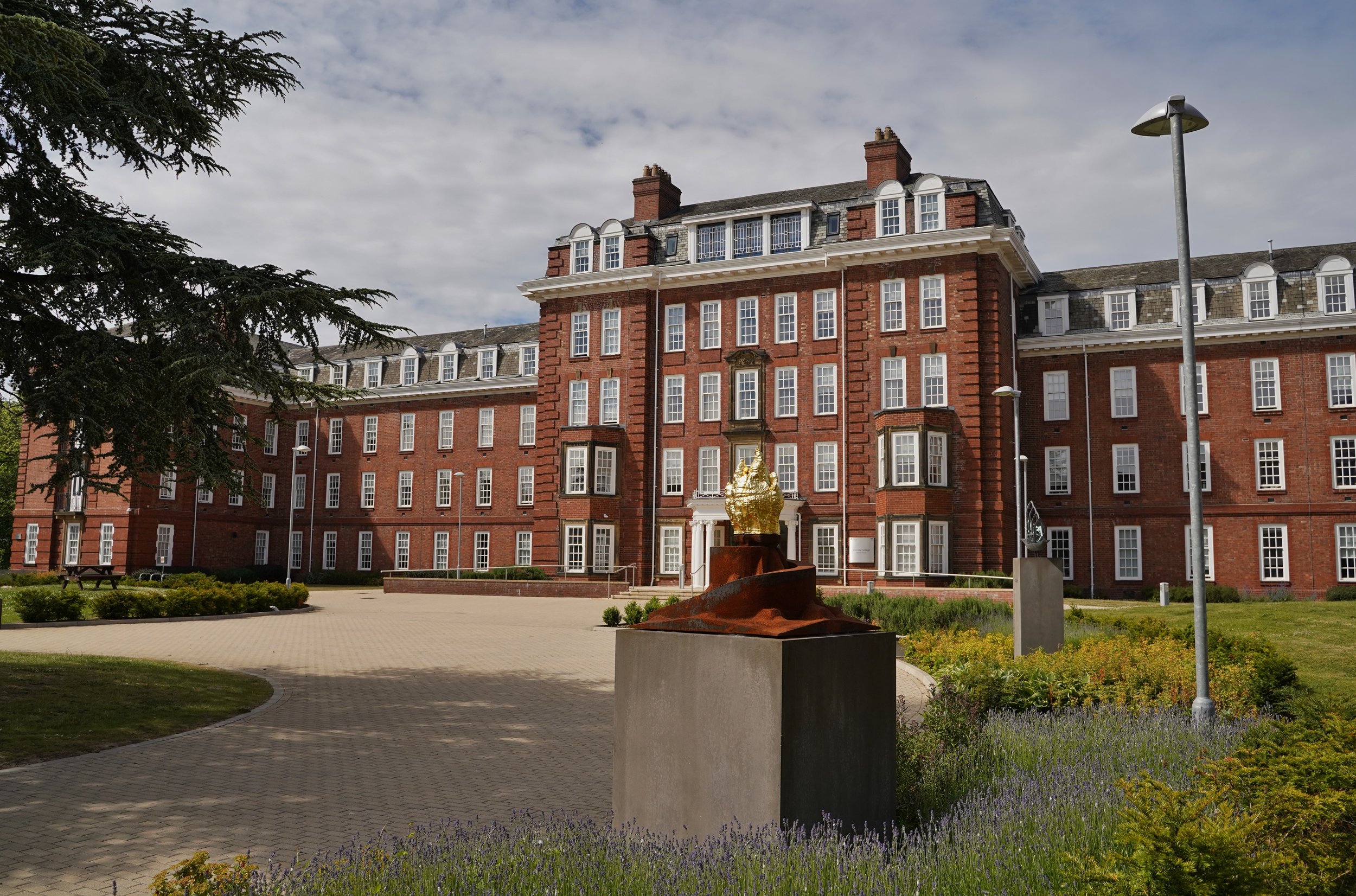
The striking red brick Ustinov College, a former teacher training college
Hild Bede College, Durham University
Location: Currently at Rushford Court, at the top of North Road near the viaduct while the main site near Gilesgate is renovated.
Type: City centre
Known affectionately as Hild Bede, this college has a distinctive double heritage, originating from two neighbouring teacher training colleges that later merged. Together they form one of Durham’s most characterful and historically significant colleges.
History: The College of the Venerable Bede was founded in 1839 as a training college for men preparing to become schoolmasters. Its sister college, St Hild’s College, was established nearby in 1858 to train women teachers. Both institutions specialised in education but soon broadened their academic horizons. By 1892 (Bede) and 1896 (Hild), each had become affiliated with the University of Durham, allowing students to study for BA and BSc degrees alongside teacher training. In 1898, graduates of St Hild’s became the first women to graduate from Durham University, a milestone in the city’s educational history.
Stephenson College, Durham University
Location: Off South Road, near the new city history centre, The Story.
Type: Hill college (newer)
Stephenson College is named after the great inventor and social innovator, George Stephenson and has a delightful motto: Me quondam mirabitur orbis (One day I shall astonish the world).
Founded in 2001, the college relocated from Teesside to the Howlands Farm site next to Josephine Butler College in 2017-19
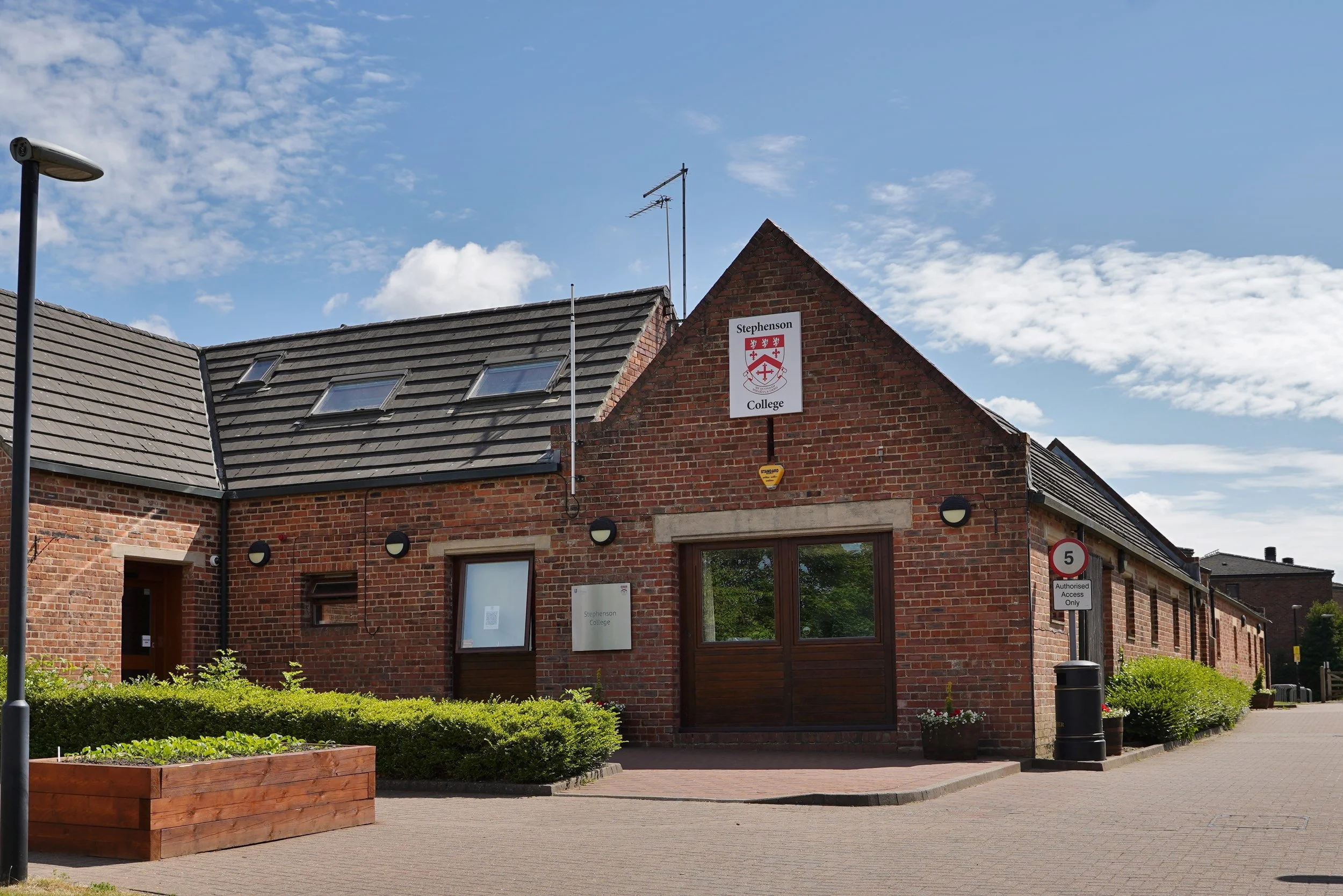
Stephenson College, one of the newer hill colleges close to The Story history centre
St Cuthberts Society, Durham University
Location: The Bailey, near Prebends’ Bridge and at Parson’s Field
Type: Peninsula college
Cuths sits on the Bailey close to the historic Prebends’ Bridge (a pedestrian bridge across the Wear) and is only a short walk from Dunelm House and the Bill Bryson Library on the Mountjoy corner. As a Peninsula college it’s convenient for arts teaching and city-centre facilities.
History & character: Established in 1888 as a society for students unattached to other colleges
Students in the City of Durham
Students at Durham University are living in the city, not just the university, so we want you to feel welcome here and to get to know the local area. See our Things to do In Durham page for information about local attractions, our Walks page for ideas for local strolls and our Days out from Durham for even more adventures. Our Home page and socials will keep you up to date on events in the city too.
Local residents sometimes raise concerns about late-night noise from student groups returning home . As locals we ask students to be considerate of neighbours.
Alice has been a Durham Pointer for many years and, although she has now retired from active “pointing”, she still supports us behind the scenes.